
The Art, Science, and Wisdom of Major Gift Fundraising
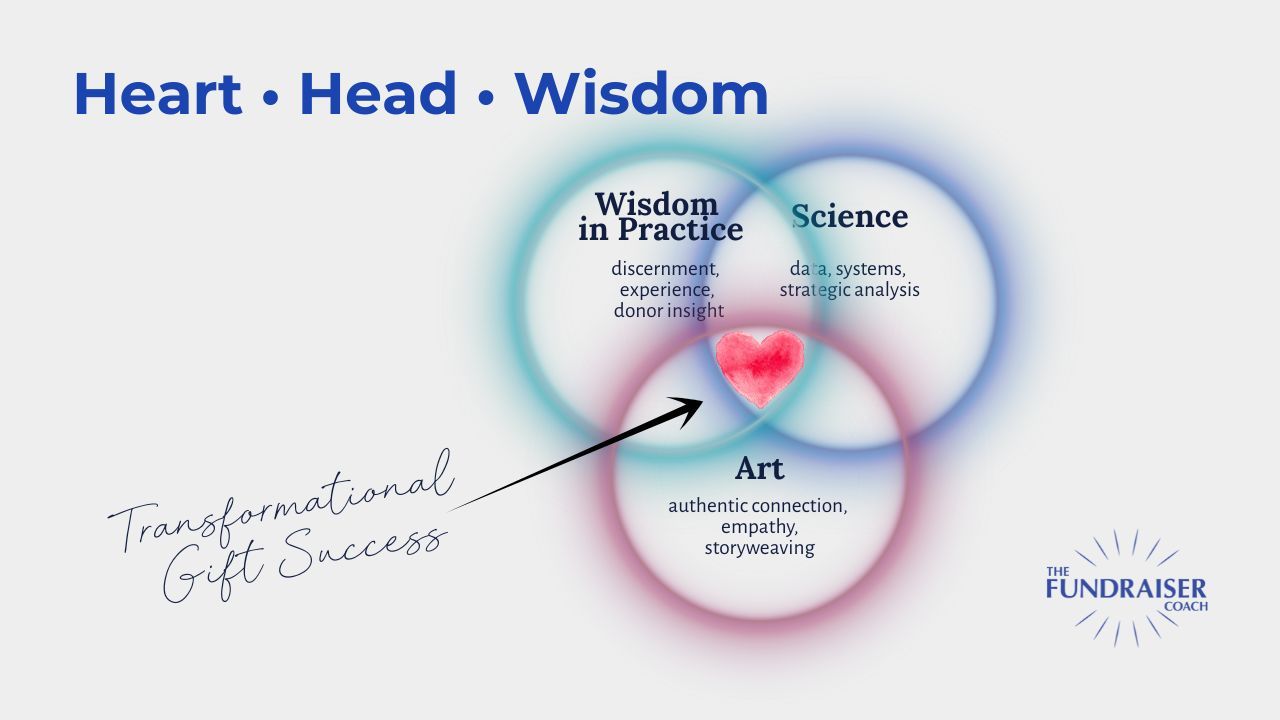
In major gift fundraising, we often talk about "the art and the science" — the balance between relationship and data, between storytelling and strategy.
After over 30 years in this work — and watching hundreds of fundraisers grow into their strengths — I've realized there's a third element we rarely name, yet it's often the most transformative.
I call it Wisdom in Practice.
Think of it this way: Art is the heart. Science is the head. And Wisdom in Practice is the bridge between them.
Art Is the Heart
This is where connection lives: in empathy, curiosity, and story.
The art of fundraising is listening with your whole self. It's remembering that donors are human beings with values, families, and legacies they want to shape.
When you show up authentically, share impact with warmth, and honor generosity, you're doing more than raising money — you're building trust.
One of my favorite mentors, Barbara G. Stowe, told me: "Philanthropy is a sacred proposition based on trust, and there are no shortcuts to trust."
Science Is the Head
Science is the systems, data, and structure that make everything else possible.
It's your CRM, your metrics, your strategy, your clear goals. The science gives you confidence and clarity — helping you spend time where it matters most.
Fundraisers who embrace this side of the work aren't cold or mechanical. They're disciplined. They know that structure creates freedom — the freedom to focus on real relationships instead of chasing every opportunity that pops up.
Wisdom in Practice Is the Bridge
Wisdom in Practice is what happens when you listen deeply, learn continuously, and start to notice patterns — in people, in generosity, and in yourself.
It's not about years in the field. It's about reflection and discernment. It's the ability to sense when a donor needs space, when to call instead of email, and when the moment feels right to invite a gift.
I see this most clearly in the fundraisers I coach. They often already know the right move — they just haven't learned to trust it yet. Wisdom in Practice is exactly that: the confidence to act on what you've noticed, what you've learned, and what you sense — while still checking the data and staying open to being surprised.
It's the humility to keep learning. To stay curious, to ask better questions, and to treat every donor conversation as an opportunity to understand something new about how people connect to the causes they care about.
When All Three Come Together
When Art, Science, and Wisdom in Practice align — that's where major gift breakthroughs happen.
Because great fundraising isn't just about tactics or techniques. It's about people. It's about you — bringing your whole self to the work.
Heart, head, and wisdom together. That's where the real magic begins.
Q: What are the three elements of successful major gift fundraising?
Most people talk about the art and the science — the balance between relationship and data, between storytelling and strategy. But after over 30 years in this work, I've come to believe there's a third element we rarely name, and it may be the most transformative.
Art is the heart: the empathy, curiosity, and connection that makes donors feel genuinely seen. Science is the head: the systems, data, and structure that give you clarity and confidence. Wisdom in Practice is the bridge: the discernment to know when to reach out, when to wait, and when the moment is right to invite a gift.
When all three come together, that's where major gift breakthroughs happen. Not tactics in isolation — but your whole self, brought thoughtfully to the work.
Q: What is "Wisdom in Practice" in fundraising — and how do I develop it?
Wisdom in Practice isn't about years in the field. It's about reflection and discernment.
It's the ability to sense when a donor needs space before you reach out again. The instinct to call instead of email at a pivotal moment. The confidence to trust your read on a relationship — while still checking the data.
You develop it by staying curious: asking better questions of yourself and your donors, noticing patterns in how people give and why, and taking time to reflect on what's working — not just what's next.
The fundraisers I see grow the fastest aren't the ones with the biggest portfolios. They're the ones who treat every donor interaction as an opportunity to learn something. That posture — humble, attentive, always improving — is where wisdom lives.
—
Beth Ann Locke is the founder of The Fundraiser Coach and has been an embedded fundraiser for 30+ years and focused on major gifts for 20 years. She coaches major gift fundraisers and nonprofit leaders to build genuine donor relationships and secure transformational gifts. Learn more at thefundraisercoach.com.
